
AIPAK ENGINEERING Pharmaceutical Autoclave
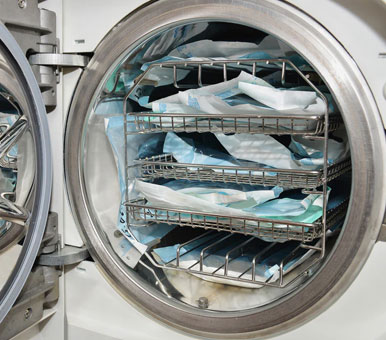
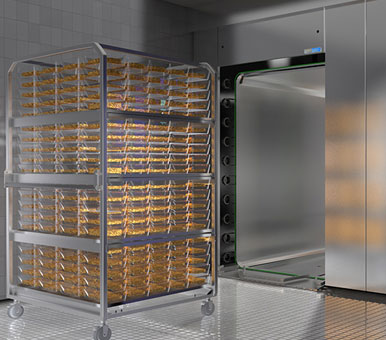
AIPAK ENGINEERING Pharmaceutical autoclave uses saturated steam as the sterilization medium, and through pulsating vacuum, the saturated steam completely penetrates the surface of the item. The high temperature saturated steam under high pressure is used to kill all microorganisms and their spores, and the sterilization effect is reliable. It is the most effective method in physical sterilization. Eliminating the influence of cold air on temperature through pulsating vacuum exhaust, and finally combining vacuum dehumidification with jacket drying for sterilization of items. It is mainly used for damp heat sterilization of the following products: sterile clothes in b/c clean area, various antibiotics, filling rubber plugs, aluminum caps and aluminum barrels, rubber plugs, aluminum caps and aluminum barrels for lyophilized powder needles and other occasions with high requirements.
AIPAK ENGINEERING Pharmaceutical Autoclave
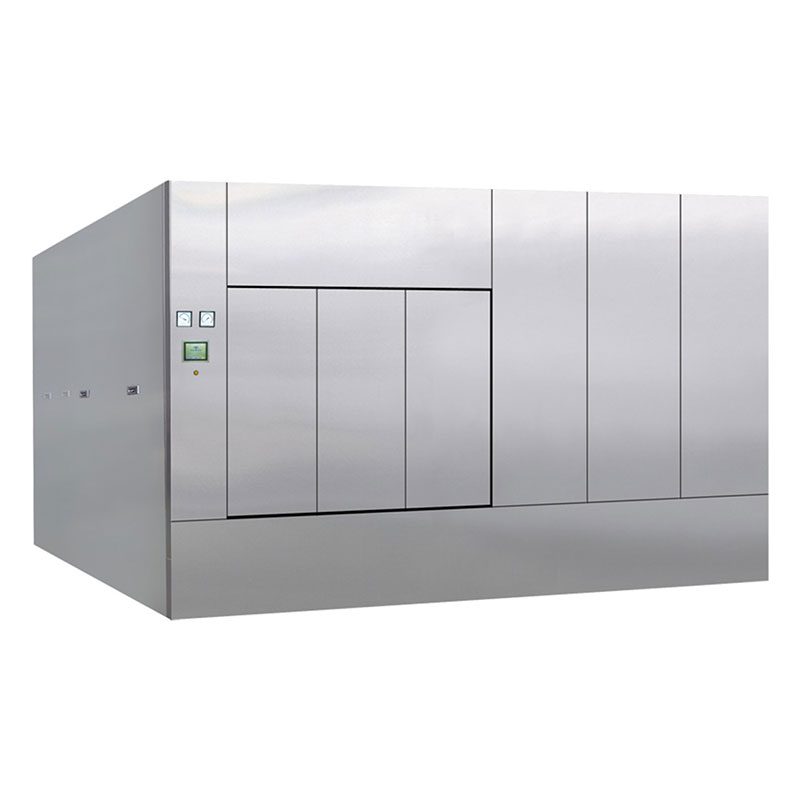
SQS/SYS Series Water Shower Pharmaceutical Autoclave
AIPAK ENGINEERING SQS/SYS series water shower pharmaceutical autoclave is widely used in thesterilization of sealed large-capacity liquid products (large glass bottle infusion, plastic bottle infusion, soft bag packaging infusion, glass bottle oral liquid, and etc.). Its temperature control is wide (80-126 ℃), and has rapid heating and cooling function, which reduces the effect to the drug by high-temperature sterilization. And because its good temperature evenness control can effectively prevent the packages from deformation.
304 or 316L stainless steel material chamber
GMP verification interface
Industrial control system PLC + HMI
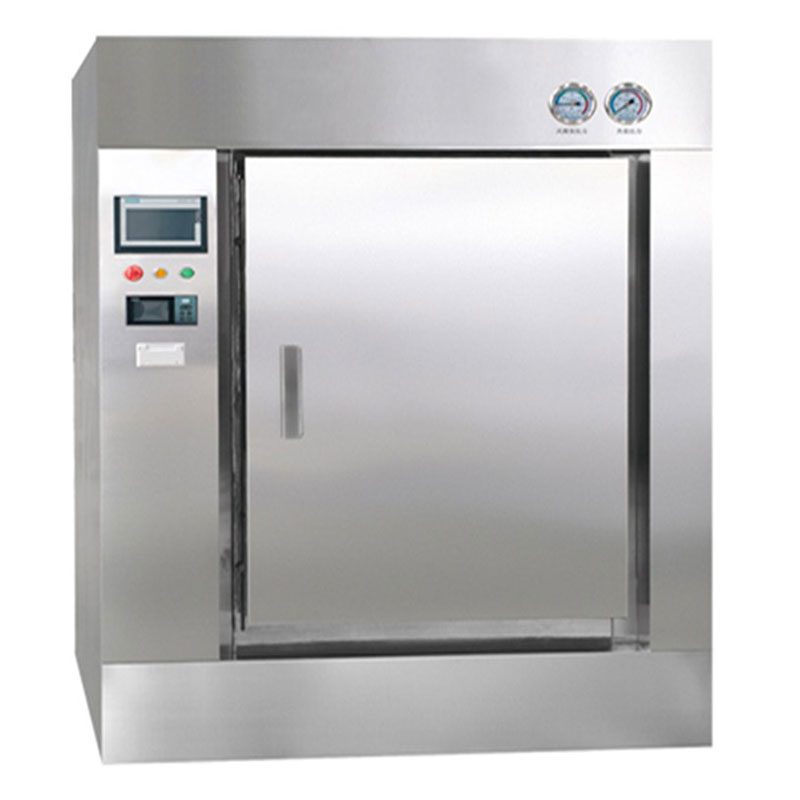
AQS Series Steam Ampoule/oral Liquid Leak Test Pharmaceutical Autoclave
AIPAK ENGINEERING series steam ampule /oral liquid leak test pharmaceutical autoclave adopts saturated steam as sterilization medium, which is used for high temperature sterilization, leak test and cleaning treatment of small regulatory capacity (smaller than 10ml) water injection and oral liquid products, such as ampules, vials and tube bottles.
Independent temperature monitoring system
F0 value and temperature time double guarantee sterilization effect
Uniform sterilization temperature of products
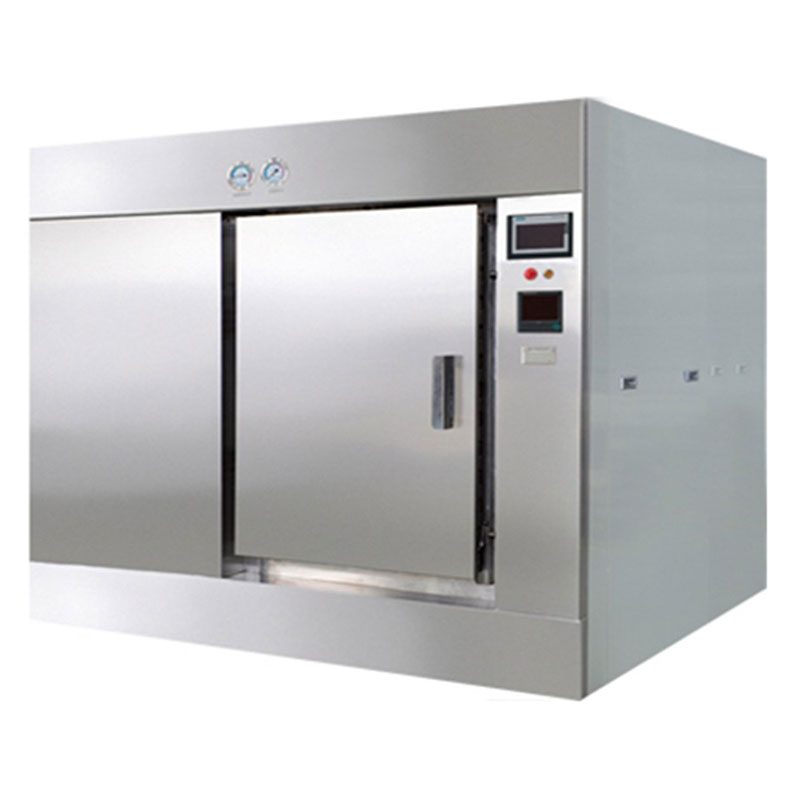
AQS-S Series Water Shower Ampoule/oral Liquid Leak Test Pharmaceutical Autoclave
AIPAK ENGINEERING AQS-S series of water shower ampule (oral liquid) leak test pharmaceutical autoclave adopts high temperature circulating water as sterilization medium, which is mainly used for water spray sterilization, leak detection, and cleaning treatment of injection and oral liquid, such as ampules, vials and tube bottle. Its temperature evenness is good, and temperature control range is wide (80-126℃). Vacuum leak test plus color water test insure 100% waste check rate. Temperature time and Fo dual control meet the requirements of pharmacopoeia.
Convenient for users to carry out equipment verification at any time
Precise control system
Unique door lock mechanism
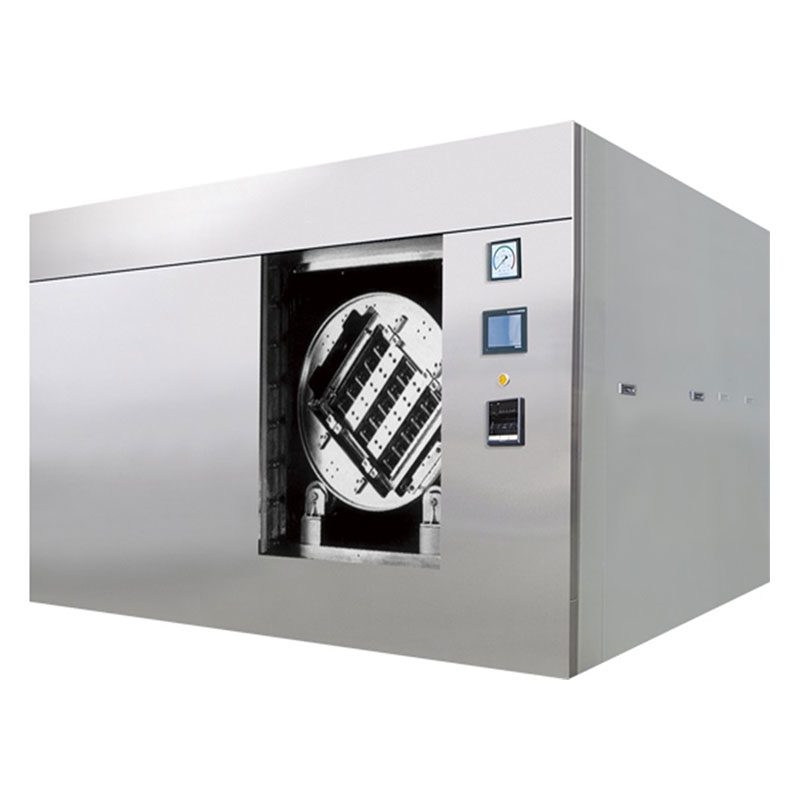
XQS/XYS Series Rotary Water Shower Pharmaceutical Autoclave
AIPAK ENGINEERING XQA/XYS series of rotary water shower pharmaceutical autoclave adopts high temperature circulating water as sterilization medium. It is mainly used for high temperature sterilization of ampules and infusions, which are filled with suspension, emulsion, and other kind liquid that is easy to precipitate or have thermo-sensitive chemical characteristic. During the sterilization process, the liquid is in relative motion state, the product sterilization temperature is more even by this way, which helps to eliminates the phenomenon of precipitation and crystallization completely.
Accurate temperature control
Stable operation
Intelligent drying system
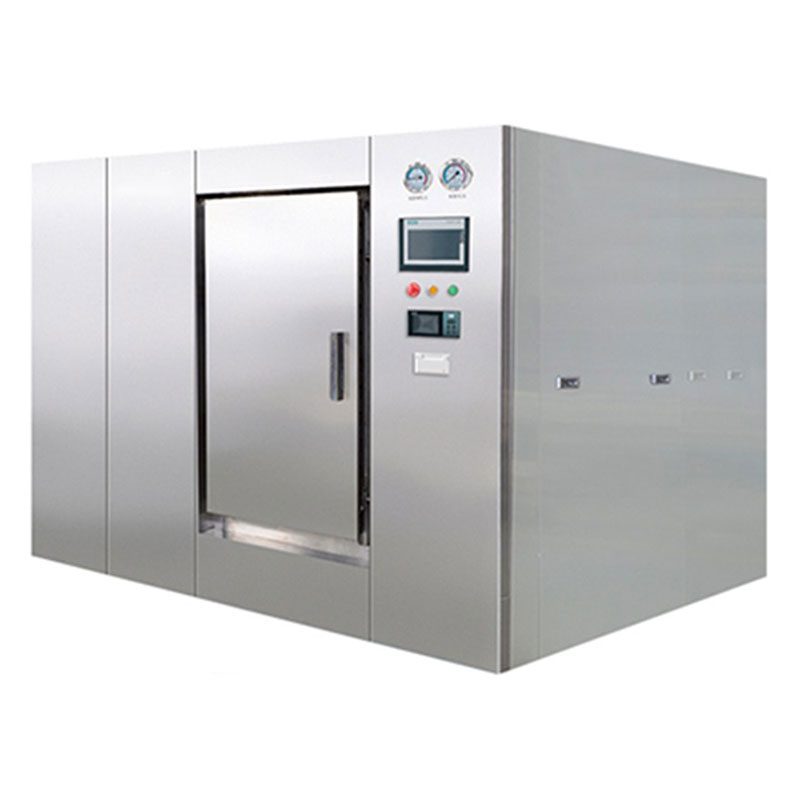
KQS/KYS Series Rapid Cooling Pharmaceutical Autoclave
AIPAK ENGINEERING KQS/KYS Series rapid cooling pharmaceutical autoclave adopts saturated steam (or pure steam) as sterilization medium, which is widely used in the high-temperature sterilization and rapid cooling operation of all kinds of sealed heat-resistant glass bottles or oral liquid packed infusion. It is widely used in the pharmaceutical and hospital preparations that have product requirement for the equipment capacity less than 5m3, and sterilization temperature between 105℃ and 126℃.
Internal and external double structure
Complete electrical and mechanical safety interlocking device
Easy to operate
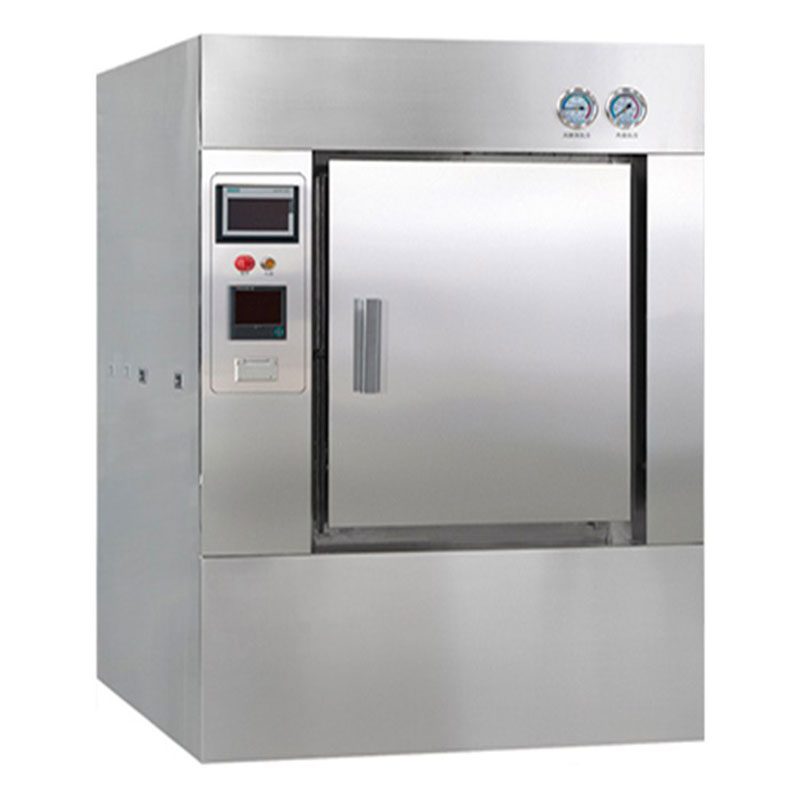
MQS Series Motor Door Pulse Vacuum Pharmaceutical Autoclave
AIPAK ENGINEERING series motor door pulse vacuum pharmaceutical autoclave adopts saturated steam (or pure steam) as a sterilization medium. It eliminates the impact of cold air on the temperature by pulse vacuum. Vacuum dehumidification combined with jacket heating for drying the items. And finally, the sterile air is emptied to achieve pressure balance.
Advanced technology,
Superior performance
Simple operation and reliable operation
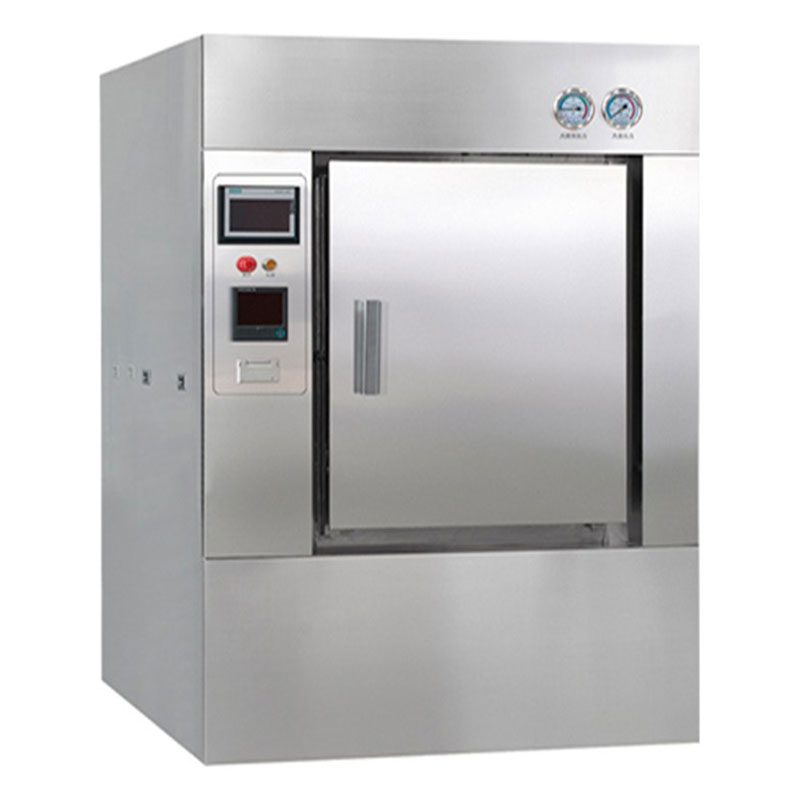
CQS Series Pure Steam Pharmaceutical Autoclave
AIPAK ENGINEERING CQS Series pure steam pharmaceutical autoclave is mainly used for the high temperature sterilization of clothes, metal utensils, aluminum cap plug that will be used in hundred level clean areas or other places that high standard requirement. It adopts pure steam as sterilization medium, all parts that contact with the sterilization items (chamber, pipeline, valve, loading cart and etc.) directly are made by 316L stainless steel. It eliminates the impact of cold air on the temperature by pulse vacuum.
Large energy, sterilization effect is excellent
Simple structure, easy operation
Suitable for pharmaceutical sterile production
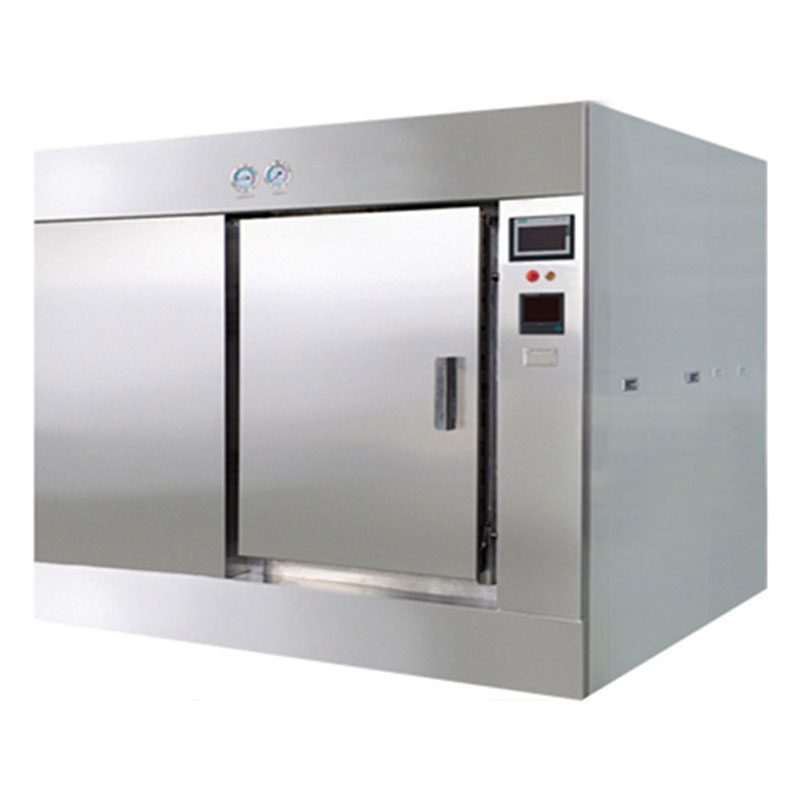
MQS-P3 Series Biological Safety Pharmaceutical Autoclave
AIPAK ENGINEERING MQS-P3 Series biological safety pharmaceutical autoclave adopts saturated steam as sterilization medium, which is equipped with high efficient bio-safety filter. It is mainly used for the high temperature sterilization for the toxic substances in P3 laboratory and biological pharmaceutical industry. Meanwhile, this series equipment has varieties of loading and sterilization programs for users to choose for sterilizing items in different properties. And this machine could be accessorized with secondary living bacilli exterminate system, and biological hard sealing or biological soft sealing to partition the loading and unloading side door area.
GQS Series General-purpose Steam Pharmaceutical Autoclave
AIPAK ENGINEERING GQS Series general-purpose steam pharmaceutical autoclave is multi-function integrated type high-temperature sterilization equipment, adopting pure steam as sterilization medium. All parts in contact with the sterilization items (chamber, pipe, valve, loading shelves, etc.) are made by 316L stainless steel. This equipment eliminates the impact of cold air on the temperature by pulse vacuum. Vacuum dehumidification combined with jacket heating for drying the items.
Reliable disinfection and sterilization effect
Convenient operation, safe use
Energy-saving and durable
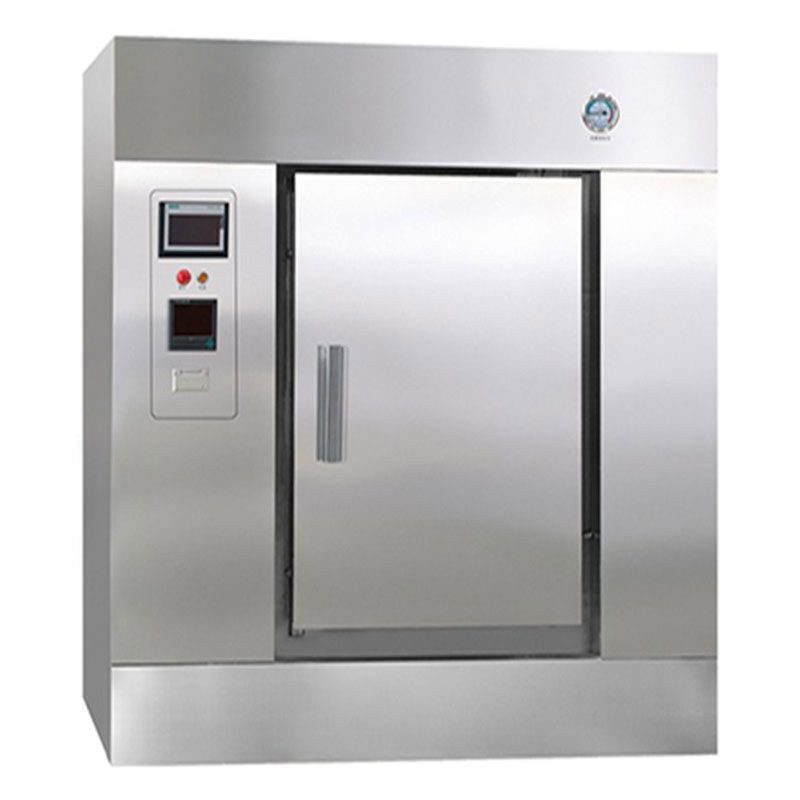
TQS/TYS Series Ventilation Pharmaceutical Autoclave
AIPAK ENGINEERING TQS/TYS Series ventilation pharmaceutical autoclave adopts mixed clean steam and air as sterilization medium, equipment and product pressure balance and back pressure protection can be well controlled by this way, so this equipment is widely used for the items that need to keep shape and sealed in the same time of sterilization. Force convection fan and air guide plate structure make the chamber non saturated steam well mixed to ensure the sterilization temperature evenness.
Fully stainless steel structure
Hand wheel type of quick-open door structure
Door safety lock system
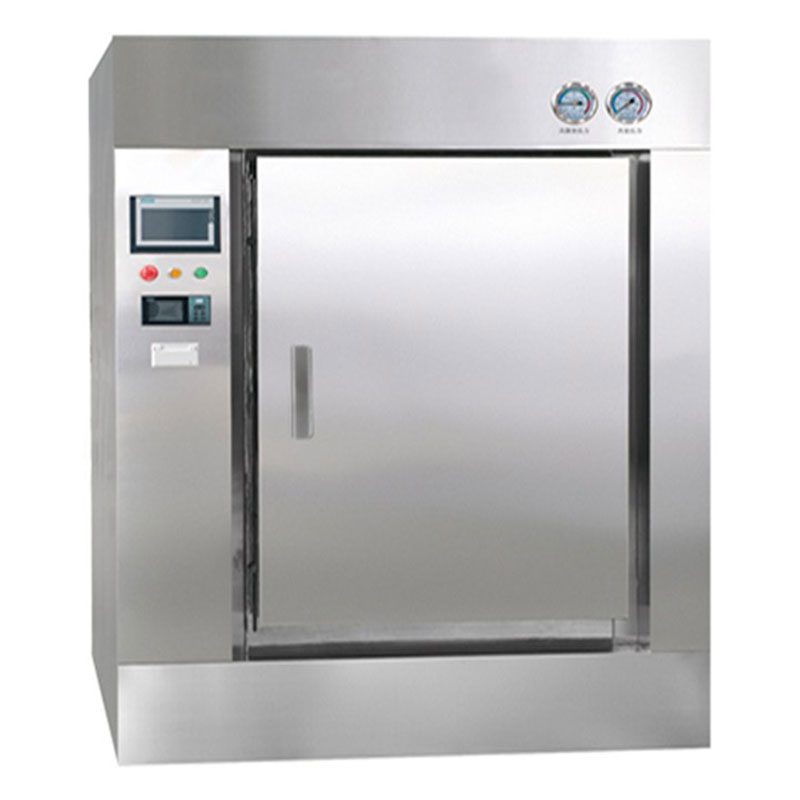
ZQS/ZYS Series Chinese Medicine Pharmaceutical Autoclave
AIPAK ENGINEERING ZQS/ZYS Series Chinese medicine pharmaceutical autoclave adopts clean steam as sterilization medium. Operated by special sterilization process, it is specifically for the high temperature sterilization and drying for the Chinese herbal medicine, Chinese medicine powder products, and some kind of food such as spices. It eliminates the influence of cold air on the temperature by pulse vacuum, vacuum dehumidification combined with jacket heating for drying, and finally, the sterile air is exhausted to achieve pressure balance. For some products that have high drying effect requirement, the equipment can also be installed with heating coil.
Over temperature&over pressure auto-protection
Safe protection of water lacking
Self-inflating type seal
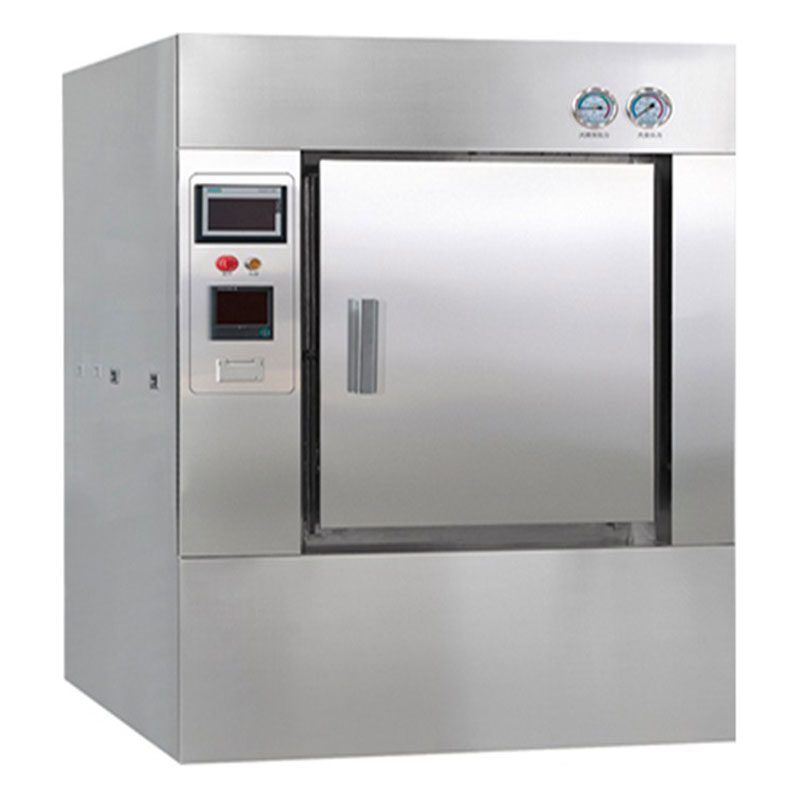
PQS/PYS Series Culture Medium Pharmaceutical Autoclave
AIPAK ENGINEERING PQS/PYS Series culture medium pharmaceutical autoclave adopts saturated steam as sterilization medium, which is specifically used for the high-temperature sterilization of medium loaded by non-sealed container. Its temperature is adjustable, and temperature detect method is flexible. It has reliable sterilization effect for the culture medium in varieties of standard and volume. Temperature time and Fo dual control meet national pharmacopoeia requirements.
Automatically shut off with beep reminding after sterilization
With two stainless steel sterilizing baskets
Easy to operate, safe and reliable
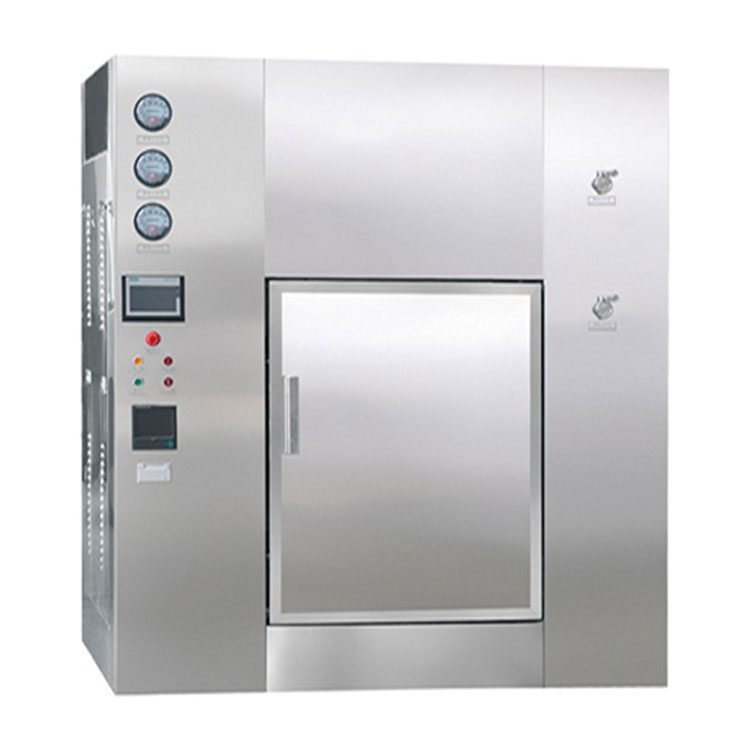
DMH Series Dry Heat Pharmaceutical Autoclave
AIPAK ENGINEERING DMH Series dry heat pharmaceutical autoclave is used for depyrogenation of high temperature bearing items after cleaning by successive circulation of high temperature air. It is widely used for the high-temperature sterilization operation of injection ampule, vials, oral liquid bottles and other medical glass bottles and stainless steel utensils in pharmaceutical factories.
Over pressure auto-discharging
Over current auto-protection
Over temperature auto-protection
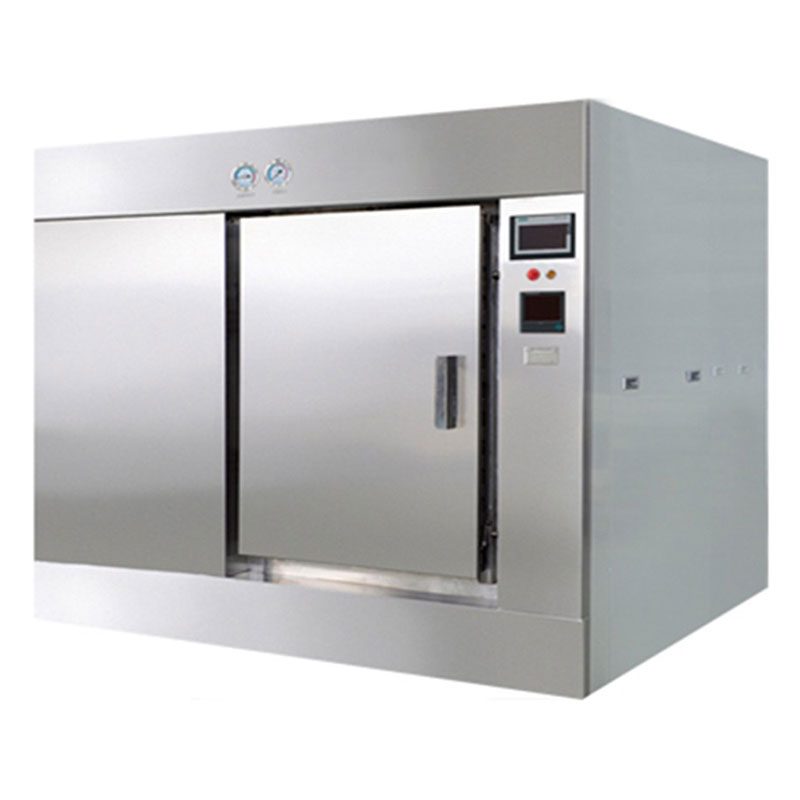
DZK Series Low Temperature Vacuum Pharmaceutical Autoclave
AIPAK ENGINEERING DZK series low temperature vacuum pharmaceutical autoclave is suitable for drying heat sensitive materials which are easy to decompose, polymerize or deteriorate at high temperature. It can be disinfected before drying, and no impurities are mixed into the material during the drying process. It is static type vacuum dryer, so the shape of dry material will not be damaged after the cycle. It is mainly used for drying medicine extract, herbal medicine and raw material medicine powder.
High quality SUS304 stainless steel material
Dual scale indicate pressure gauge
Light indicate working status
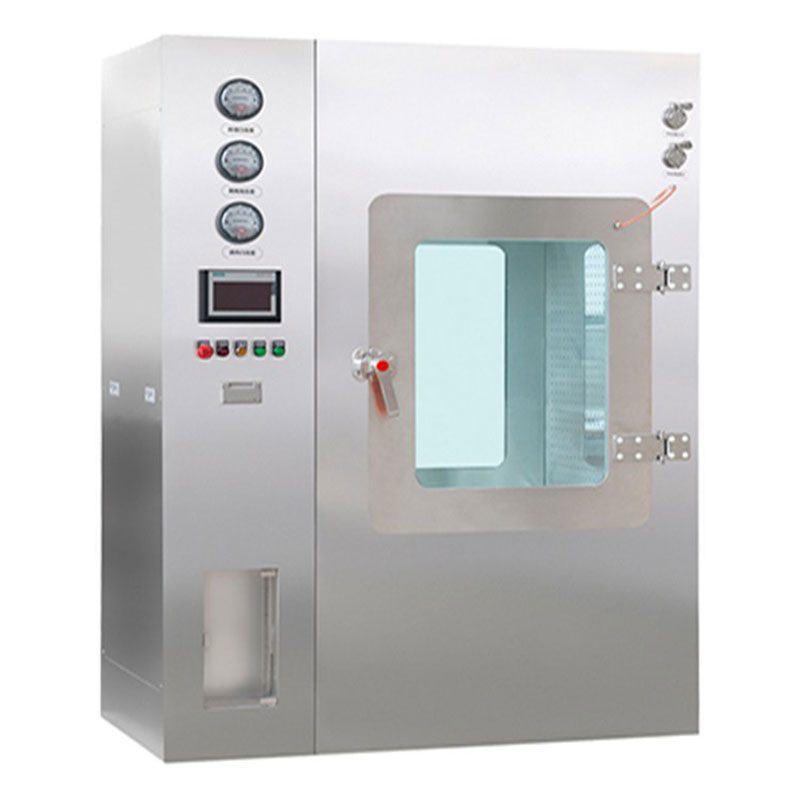
VHP Series Hydrogen Peroxide Pharmaceutical Autoclave
AIPAK ENGINEERING VHP series hydrogen peroxide pharmaceutical autoclave this transfer chamber sterilize the surface of the interior chamber and items inside the chamber by using vaporized hydrogen peroxide sterilization technique, to ensure that items will not bring new microbial contamination to the high grade clean area after passing through the sterile transfer chamber.
LED digital display screen
Microcomputer control system
Temperature, time of sterilization can be set
AIPAK ENGINEERING Pharmaceutical Autoclave Applications

AIPAK ENGINEERING Pharmaceutical Autoclave Video
The Buyer's Guide
Pharmaceutical Autoclave: Terminal Sterilization Equipment Guide
This guide covers production autoclaves for pharmaceutical manufacturing — the sterilizers that terminally sterilize filled IV bottles, bags, ampoules and vials, and that sterilize the garments, utensils and filters used inside classified areas.
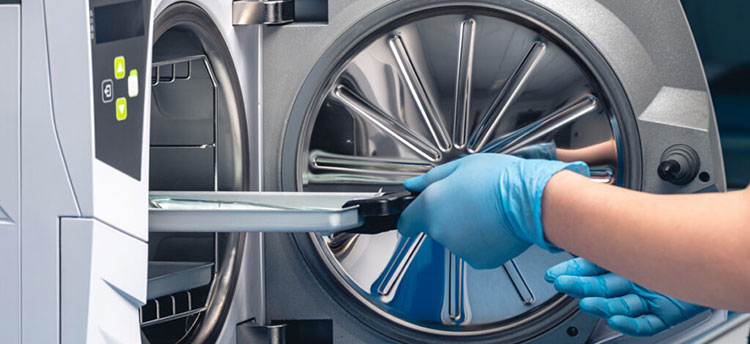
Picture Courtesy: Ethide Laboratories
It does not cover benchtop laboratory autoclaves, dental sterilizers, or hospital CSSD equipment. Those are a different class of machine governed by a different standard, and the selection logic below does not apply to them.
If you are specifying sterilization equipment to sit downstream of a filling line, this page is written for you.
1. What is a pharmaceutical autoclave?
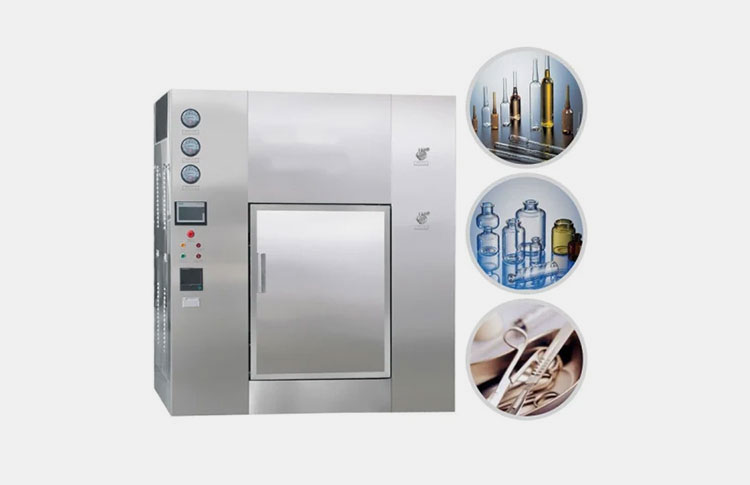
Pharmaceutical Autoclave
A pharmaceutical autoclave is a pressure vessel that uses saturated steam, superheated water or a steam–air mixture to achieve a validated Sterility Assurance Level in filled product or in process materials.
Three characteristics separate a production autoclave from a laboratory one:
Validated lethality, not just a cycle.
The machine controls and records temperature, time and F₀ simultaneously, with an independent data recorder cross-checking the control system so that records cannot be altered.
Counter-pressure capability.
Filled containers build internal pressure as they heat. Production autoclaves for liquid product balance chamber pressure against container pressure so that plastic bottles and soft bags do not deform or burst.
Scale.
Production chambers run from roughly 0.25 m³ up to 60 m³. A benchtop autoclave is 16–25 litres — three orders of magnitude smaller, and not a member of the same equipment family.
2. Terminal sterilization, SIP and depyrogenation — what is the difference?
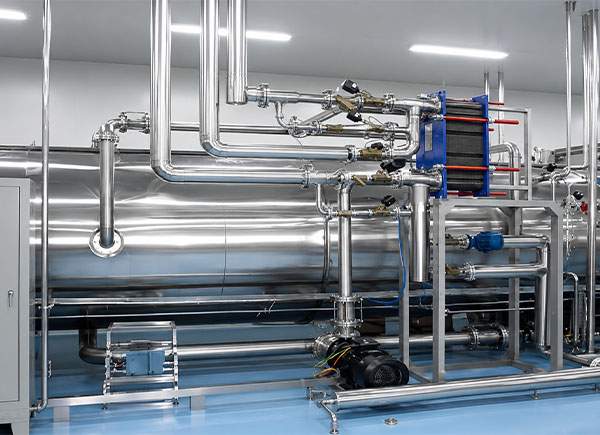
Part of sterilization progress
These three are routinely confused, and confusing them produces the wrong equipment list.
| Terminal sterilization | Sterilization-in-place (SIP) | Depyrogenation | |
| What is treated | Product, already filled and sealed in its final container | Equipment and pipework, in position | Glass containers and metal parts, after washing |
| Agent | Saturated steam, superheated water, or steam–air mixture | Pure steam | Hot air, 250–300 °C |
| Target | Micro-organisms — achieves SAL ≤ 10⁻⁶ | Micro-organisms on product-contact surfaces | Bacterial endotoxin, which moist heat does not destroy |
| Equipment | Water shower / rotary / leak-test / ventilation sterilizer | Pure steam sterilizer, or in-line SIP of the process system | Dry heat sterilizer or depyrogenation tunnel |
The critical point: moist heat at 121 °C kills micro-organisms but does not destroy pyrogens. Washed ampoules and vials destined for a parenteral line must be depyrogenated by dry heat before filling. A steam autoclave cannot substitute.
3. Which sterilizer type for which dosage form?
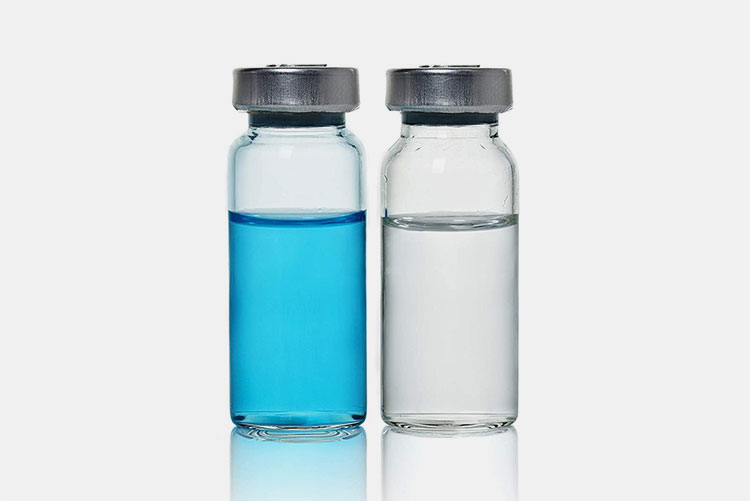

| Type | Medium | Counter-pressure | Typical load | Capacity range |
| Water shower sterilizer | Superheated circulating water spray | ✔ | Glass bottle / plastic bottle / soft bag IV solutions; glass bottle oral liquid | 0.36–60 m³ |
| Rotary water shower sterilizer | Superheated water + chamber rotation | ✔ | Suspensions and emulsions — product in relative motion, eliminating sedimentation and crystallization | 1.0–21 m³ |
| Steam ampoule leak-test sterilizer | Saturated steam + vacuum leak test | — | Ampoules, vials, tube bottles; injectables ≤ 10 ml | 0.25–5.0 m³ |
| Water shower ampoule leak-test sterilizer | Superheated water + vacuum and dye leak test | ✔ | Same, with better temperature uniformity across the load | 1.2–5.0 m³ |
| Rapid cooling sterilizer | Saturated steam, fast heat-up and cool-down | — | Heat-resistant sealed glass bottle infusion and oral liquid, 105–126 °C | ≤ 5 m³ |
| Ventilation sterilizer | Clean steam / air mixture | ✔ back-pressure protection | Pre-filled syringes, blood product bags, retort-pouch items, contact lenses | 1.0–6.0 m³ |
| Pulse vacuum sterilizer | Saturated or pure steam | — | Textiles, metal utensils, filters, glassware, media | 0.25–2.5 m³ |
| Pure steam sterilizer | Pure steam, all product-contact parts 316L | — | Grade A/B garments, filling utensils, aluminium caps and rubber stoppers | 0.25–2.5 m³ |
| Dry heat sterilizer | Circulating hot air, ambient to 300 °C | — | Depyrogenation of washed ampoules, vials, oral liquid bottles | 0.25–1.8 m³ |
| Biological safety sterilizer | Saturated steam + bio-safety filter | — | P3 laboratory and biopharmaceutical toxic materials; secondary inactivation available | 0.25–2.5 m³ |
| Culture medium sterilizer | Saturated steam | — | Media in non-sealed containers — supports media fill programmes | 0.25–2.5 m³ |
| VHP transfer chamber | Vaporized hydrogen peroxide, ambient temperature | — | Material transfer between clean zones; 6-log against Geobacillus stearothermophilus | 0.36–2.5 m³ |
Common configuration across the range: 304 or 316L chamber; standard GMP validation ports; PLC + HMI with user management, data storage and recipe management; independent data recording device cross-checked against the control system; temperature, time and F₀ dual control.
Structural note: water shower sterilizers come in two structures — a motor-driven door with horizontal rectangular chamber for smaller units, and a sliding door with horizontal cylindrical chamber for large units.
4. How does terminal sterilization work, and what is F₀?
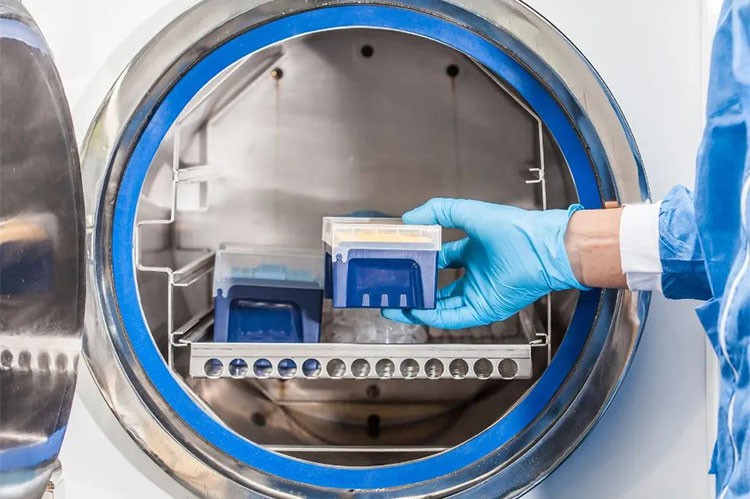
Sterility of Items in Pharmaceutical Autoclave-Picture Courtesy: Electro-Steam
The cycle
Air removal. Steam is admitted and displaces the cold air in the chamber. Air does not become steam — it must be physically removed, either by gravity displacement or by pulse vacuum. Residual air is the single most common cause of cold spots.
Why this matters, in one number: the heat transfer coefficient of air is approximately 1.1 W/m²·°C against 2,106 for steel and 14,763 for copper. A 1 mm air film presents roughly the same thermal resistance as 15 m of copper. Any trapped air is an insulating blanket over the load.
Heat-up. The load is brought to sterilization temperature. Superheated water systems circulate large volumes of water as the heat transfer medium, which is what delivers temperature uniformity across a large chamber.
Exposure. The load is held at temperature for the validated dwell time. Lethality accumulates throughout, not only during the hold.
Cooling. Chamber pressure is managed against container internal pressure during cool-down. This is where containers deform if counter-pressure is inadequate.
Sterilization parameters
| Parameter | Value |
| Reference moist heat conditions | 121 °C / 15 min, or 134 °C / 3 min |
| Sterility Assurance Level | ≤ 10⁻⁶ |
| F₀ definition | Equivalent exposure time in minutes at 121 °C, referenced to Z = 10 °C |
| F₀ target, terminal sterilization | Product-specific; commonly ≥ 8 min, with overkill approaches typically ≥ 12 min |
| Water shower temperature control range | 80–126 °C |
| Rapid cooling sterilizer range | 105–126 °C |
| Design pressure, water shower series | 0.165 (0.27) MPa |
| Design temperature, water shower series | 129 °C |
| Design pressure, vacuum and leak-test series | 0.245 MPa |
| Design temperature, vacuum and leak-test series | 139 °C |
Vacuum leak test
For vacuum-cycle sterilizers, chamber integrity is verified before the load is committed:
| Step | Value |
| Evacuate to | 180 mbar |
| Stationary phase | 5 min |
| Leak test phase | 10 min |
| Acceptance criterion | ΔP < 1.3 mbar |
5. Why counter-pressure matters for plastic bottles and soft bags?
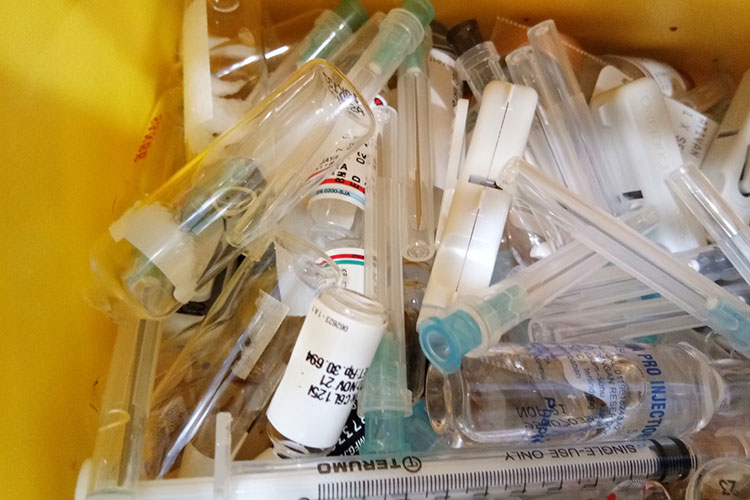
Sterilizing broad range items- picture courtesy: SWS group
A widespread misconception holds that plastic containers cannot be autoclaved. For general-purpose laboratory plasticware in a simple steam autoclave, that is broadly true. For pharmaceutical primary packaging in a counter-pressure sterilizer, it is not — plastic bottle IV solutions and non-PVC soft bags are terminally sterilized as a matter of routine, and the loading data in Section 6 is published for exactly those container types.
The mechanism:
| What happens | Consequence | |
| Without counter-pressure | Container internal pressure rises above chamber pressure during heat-up and cool-down | Bottle deformation, bag ballooning, seal failure |
| With counter-pressure | Chamber pressure is actively balanced against container pressure throughout the cycle | Container geometry and seal integrity preserved |
This is why water shower and ventilation sterilizers exist as distinct machine types rather than as variants of a pulse vacuum sterilizer. The pressure balance is also what makes these machines suitable for retort-pouch packaged goods outside pharmaceuticals.
What genuinely should not go into a steam sterilizer: flammable solvents, corrosive chemicals, volatile compounds that decompose under heat and pressure, radioactive materials, and reactive metals. Container materials are a validation question, not a blanket prohibition.
6. Loading capacity — the data that actually drives selection
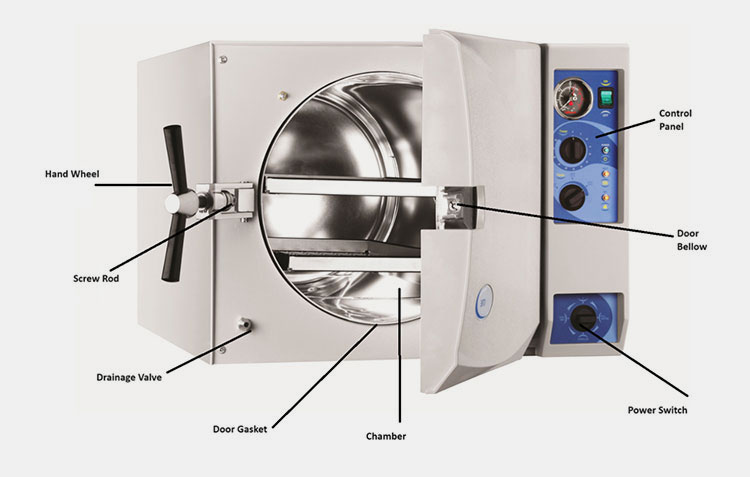
Basic parts of pharmaceutical autoclave
Chamber volume alone does not tell you what a sterilizer will do for your line. Loading quantity does.
Water shower sterilizer — large capacity series
Utilities and dimensions
| Model | Chamber | Steam kg | DI water kg | Compressed air m³ | Power kW | Net weight kg |
| SYS-5 | Φ1500 × 3600 | 320 | 280 | 8 | 8 | 6,000 |
| SYS-9 | Φ1500 × 5400 | 420 | 400 | 12 | 10 | 7,000 |
| SYS-14 | Φ2000 × 4280 | 550 | 550 | 17 | 14 | 8,000 |
| SYS-22 | Φ2000 × 7210 | 1,150 | 980 | 26 | 20 | 11,000 |
| SYS-33 | Φ2000 × 10500 | 1,650 | 1,300 | 38 | 32 | 14,500 |
| SYS-60 | Φ2500 × 12300 | 2,700 | 1,900 | 66 | 54 | 22,000 |
Loading quantity, units per batch
| Model | Glass 500 ml | Glass 250 ml | Glass 100 ml | Plastic bottle 500 ml | Soft bag 500 ml |
| SYS-5 | 2,016 | 3,570 | 6,804 | 1,872 | 1,008 |
| SYS-9 | 3,072 | 5,320 | 10,368 | 2,880 | 1,680 |
| SYS-14 | 4,320 | 7,392 | 14,112 | 4,800 | 2,380 |
| SYS-17 | 5,400 | 9,240 | 17,640 | 6,000 | 2,975 |
| SYS-20 | 6,480 | 11,088 | 21,168 | 7,200 | 3,570 |
| SYS-22 | 7,560 | 12,936 | 24,696 | 8,400 | 4,165 |
| SYS-29 | 9,720 | 16,632 | 31,752 | 10,800 | 5,355 |
| SYS-33 | 10,800 | 18,480 | 35,280 | 12,000 | 5,950 |
| SYS-36 | 11,880 | 20,328 | 38,808 | 13,200 | 6,545 |
| SYS-53 | 16,800 | 27,440 | 52,000 | not applicable | not applicable |
| SYS-60 | 20,592 | 32,340 | 60,192 | not applicable | not applicable |
Two selection rules that fall straight out of this table:
Soft bags load at roughly half the density of rigid containers. At 500 ml, SYS-22 takes 8,400 plastic bottles or 7,560 glass bottles — but only 4,165 soft bags. Bags need to hold their shape and require spacing between them. A soft bag line therefore needs more sterilizer capacity than a bottle line of the same hourly output, and this is one of the most frequently underestimated line items in soft bag project budgets.
Above SYS-36, plastic and bag loading no longer applies.
The two largest models are rated for glass only. Loading arrangement in large-diameter long chambers constrains what can be handled. For a plastic bottle or soft bag line, SYS-36 is the practical ceiling — capacity beyond that comes from additional units, not a bigger chamber.
Ampoule leak-test sterilizer
Loading quantity, units per batch
| Model | 1 ml | 2 ml | 5 ml | 10 ml | 20 ml | Oral liquid 10 ml |
| AQS1.2 | 115,000 | 74,000 | 31,000 | 21,000 | 11,000 | 27,280 |
| AQS1.5 | 150,000 | 98,000 | 42,000 | 27,000 | 14,800 | 35,464 |
| AQS2.0 | 175,000 | 110,000 | 51,000 | 34,000 | 18,000 | 49,104 |
| AQS2.5 | 270,000 | 180,000 | 71,000 | 49,000 | 27,000 | 61,380 |
| AQS3.0 | 320,000 | 210,000 | 85,000 | 58,000 | 32,000 | 73,656 |
| AQS4.0 | 430,000 | 280,000 | 110,000 | 78,000 | 43,000 | 92,070 |
| AQS5.0 | 520,000 | 340,000 | 133,000 | 92,000 | 52,000 | 122,760 |
Utilities: steam 60–250 kg, washing water 680–2,500 kg, compressed air 1–5 m³, power 4–9 kW per cycle depending on model.
Full capacity tables for all series are available on request.
7.How do you size a sterilizer for your filling line?
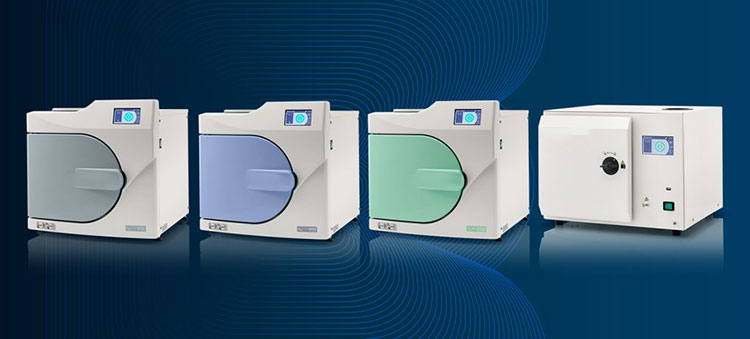
Sterilization class of pharmaceutical autoclave- Picture Courtesy: British dental nurse
Size from throughput, not from floor space.
Step 1 — Take the hourly output of the filling line in the container format that governs.
Step 2 — Divide the sterilizer batch loading by that output. This gives the time to accumulate one full load.
Step 3 — Compare against the full cycle time. If a complete cycle — heat-up, exposure, cool-down, unloading — takes longer than the accumulation time, product will queue in front of sterilization.
Step 4 — Add units or increase chamber size until cycle time fits inside accumulation time, with margin for cycle variability and maintenance.
Worked example
| Input | Value |
| Container | 500 ml glass bottle |
| Filling line output | 12,000 bottles/hour |
| Sterilizer | SYS-22, batch loading 7,560 bottles |
| Time to fill one load | 7,560 ÷ 12,000 = 0.63 h ≈ 38 minutes |
If the complete sterilization cycle exceeds 38 minutes — which it will for a load of this size — a single unit cannot keep up with the line. Two units operating in rotation is the minimum configuration at this throughput.
Additional sizing considerations: loading method (tray, loading cart with transfer trolley, or floor loading) affects changeover time and cleanroom layout; the sterilizer is normally a double-door pass-through between classified zones, so door type and wall penetration must be settled at layout stage, not at order stage.
8. What standards apply?
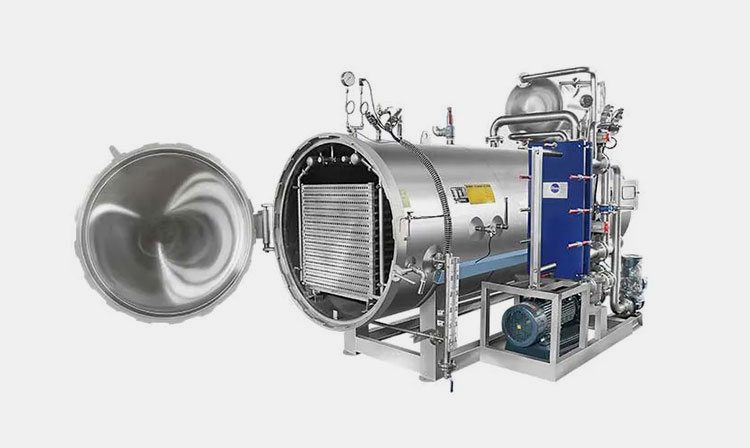
Large Pharmaceutical Autoclave- Picture courtesy: packaging machine
| Standard | Scope |
| EN 285 | Large steam sterilizers — the applicable standard for pharmaceutical production autoclaves |
| EU GMP Annex 1 | Manufacture of sterile medicinal products; terminal sterilization requirements and the decision logic for choosing terminal sterilization over aseptic processing |
| Pharmacopoeial general chapters on sterilization | F₀ methodology, SAL, biological indicators |
| EN 13060 | Small steam sterilizers — the origin of the Class N / S / B designations. These classes apply to benchtop units and are not a classification for production autoclaves. They are listed here only because they are frequently and incorrectly applied to production equipment |
| ISO 11138 | Biological indicators |
| ISO 17665 | Moist heat sterilization — process development and validation |
9. What validation is performed?
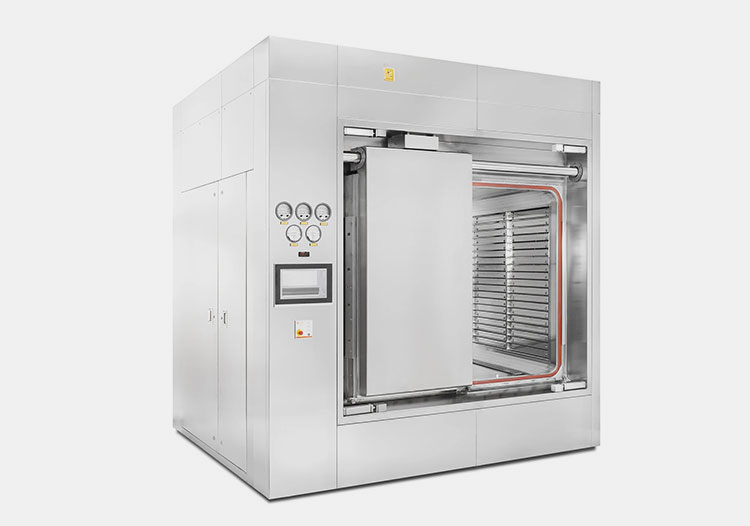
AIPAK ENGINEERING's dry heat sterilizer
Thermal validation is where sterilizer suppliers separate. A complete programme includes:
Instrumentation
- Dedicated sterilizer validation system with 16 / 32 / 48 / 64 temperature channels
- Automatic sensor error correction, accuracy to 15 °C
- Validation data and conclusions locked against alteration
Temperature validation sequence
- Sensor zero-point and high-point correction
- Empty chamber heat distribution — three repeat runs, cold spot identified
- Loaded chamber heat distribution — minimum three repeat runs, cold spot confirmed
- Loaded heat penetration — three repeat runs, confirming that F₀ at the cold spot meets the process requirement under the set cycle
- Separate biological indicator test report
Qualification documentation
- URS response, FS, DQ
- Material certificates for chamber and product-contact parts
- FAT protocol and report, including vacuum leak test
- SAT protocol and report
- IQ, instrument calibration certificates, OQ, PQ
- Computer system validation
- SOPs and operator training
The three-run repeatability requirement at both empty and loaded conditions, plus an independent BI report, is the part most often thinned out by lower-cost suppliers. It is worth checking line by line against any competing quotation.
10. Pure steam, clean steam and plant steam
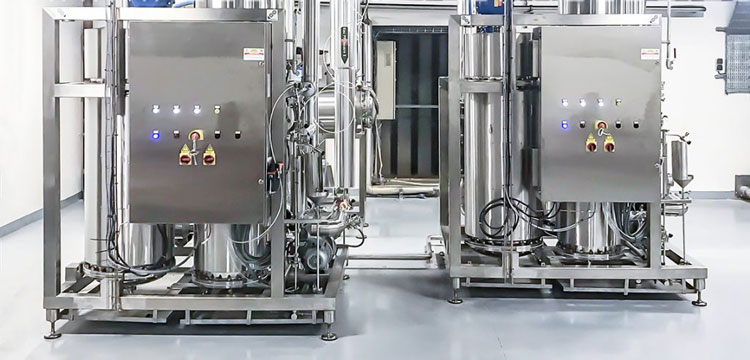
AIPAK ENGINEERING's pure steam
Steam quality is not a detail — it determines what the sterilizer can legitimately be used for.
| Grade | Source | Feed water | Vessel | Piping | Typical use |
| Plant steam | Conventional boiler | Softened water | Carbon steel | Carbon steel | HVAC, laundry, general utilities |
| Clean steam | Clean steam boiler | Purified water | Stainless steel | Stainless steel | Food and beverage, lower-criticality applications |
| Pure steam | Pure steam generator | Purified water | Stainless steel | Stainless steel | Pharmaceutical SIP, Grade A/B area loads |
Pure steam sterilizers use 316L for every part contacting the load — chamber, pipework, valves, loading racks. Chamber valves are diaphragm pneumatic type, and the sterile filter is fitted for in-line sterilization and integrity testing.
Condensate handling. Discharging live steam to a floor drain is a facility hazard and a humidity problem. Correct practice: spray-cool the discharge — which reduces steam volume by approximately 1,700 times — maintain an air break between the equipment drain and the floor drain, discharge condensate only below 45 °C, and set the floor drain flush with the floor with a water seal.
11. Common problems and troubleshooting
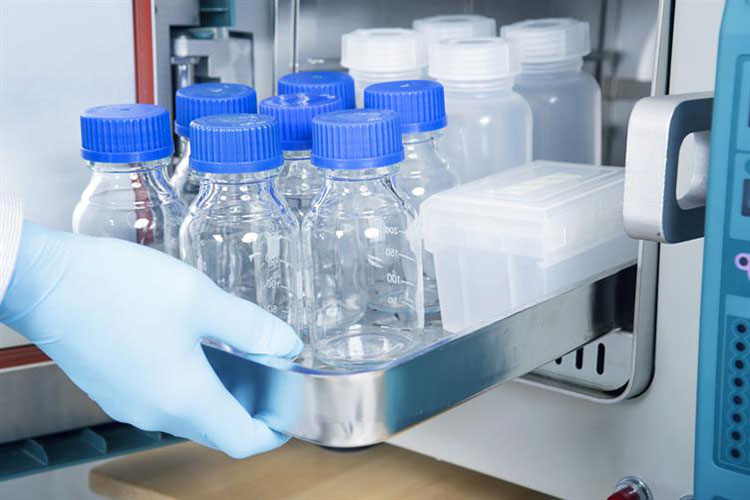
Items Placement in Pharmaceutical Autoclave- Picture Courtesy: MedicalSearch
| Symptom | Likely cause | Action |
| Set temperature not reached | Steam generator off or faulty; chamber drain clogged, preventing air discharge; setpoint above design maximum | Verify steam supply; clear the drain; confirm setpoint within design temperature |
| Cold spot in an otherwise normal cycle | Residual air not fully displaced — the dominant cause; inadequate pulse vacuum, or load arrangement blocking circulation | Verify air removal cycle; re-run empty and loaded heat distribution; review loading pattern |
| No steam in jacket | Damaged heating element; steam line incorrectly connected; no power to generator | Repair element; correct the connection; restore supply |
| Cycle terminates prematurely | Large liquid loads extend heat-up beyond cycle limits | Reduce container volume or extend the cycle envelope |
| Load not sterile | Overcrowding or loading that shields the drain; insufficient steam; incorrect cycle selected | Correct loading pattern; verify steam supply; reset cycle; re-validate |
| Container deformed or seal failed | Inadequate counter-pressure during cool-down | Review pressure balance profile; confirm the sterilizer type suits the container format |
| Product degraded | Cycle too aggressive for the formulation | Reduce temperature and extend time to reach the same F₀; consider rotary water shower for suspensions |
12.What are the maintenance points for pharmaceutical autoclave?
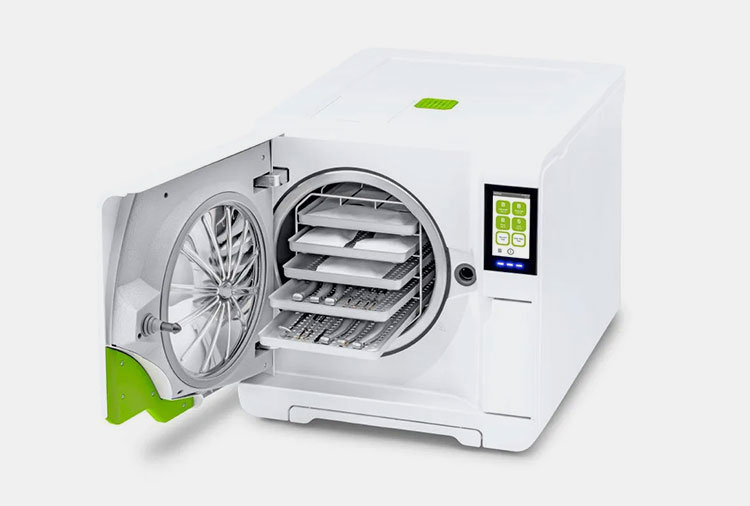
Pharmaceutical autoclave- picture courtesy: Alldent
The maintenance points for pharmaceutical autoclave are the following:
Daily Pharmaceutical Autoclave Maintenance
It includes special attention to inside chamber cleaning where mostly chances of spilling the reagents or items are high such as fluids, waste material, etc. therefore it is mostly done by using a damp cloth.
Weekly Pharmaceutical Autoclave Maintenance
It is involved with the full cleaning of pharmaceutical autoclaves. For example, the exterior and interior of the machine. The inside walls are cleaned by applying scouring pads with mild detergent and water with a final application of antibacterial wipes. It is suggested to avoid aggressive cleaning chemicals such as chlorine, or hydro-oxides.
Visualize the door check its movement and apply to grease if required. For long-lasting gasket, you should keep checking weekly. Check the drain and exhaust vent and clear if any blockade there.
Monthly Pharmaceutical Autoclave Maintenance
The monthly maintenance includes flushing of standing water or accumulated waste and cleaning of the interior chamber followed by a final antibacterial spray.
13.What are the problems and troubleshooting related to a pharmaceutical autoclave?
It is the ideal case in which a pharmaceutical autoclave always works as planned. However, problems are encountered with this equipment. The answer to troubleshooting them is to identify different problems.
Here we will overview some frequent problems in the pharmaceutical autoclave and how to troubleshoot them.
The Set Temperature Point in the Autoclave is Not Reached
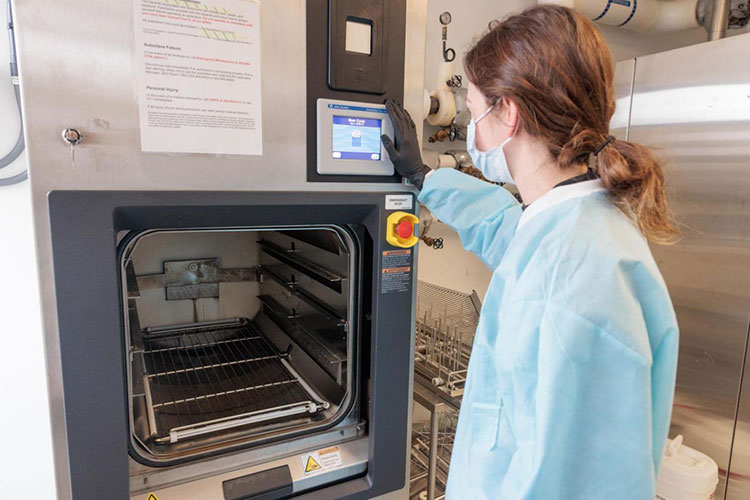
Set Temperature Point in Autoclave is Not Reached- Picture Courtesy: The George Washington University
| Cause | Troubleshooting |
| The steam generator is not turned on.
Defective steam generator. Clogging in the chamber drain prevents air from discharging from the vessel and steam does not reach the right pressure and temperature. The set temperature is greater than the highest temperature allowance. |
Ensure the steam generator is turned on.
Repair the faulty steam generator. Unclog the chamber drain. Reset the temperature and ensure it is within the maximum range of the pharmaceutical autoclave. |
No Steam in Jacket
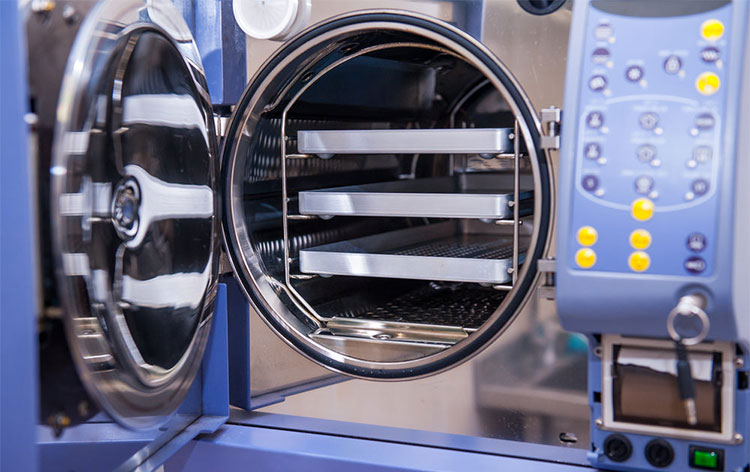
No Steam in Jacket- Picture Courtesy: Medical Equipment Services
| Cause | Troubleshooting |
| Damaged heating elements.
Improper feeding of steam line in pharmaceutical autoclave. There is no power supply to the steam generator. |
Fix and repair the heating element.
Adjust and refeed the steam line properly in the pharmaceutical autoclave. Turn on the power supply for the steam generator. |
Premature Termination of Sterilization Cycle
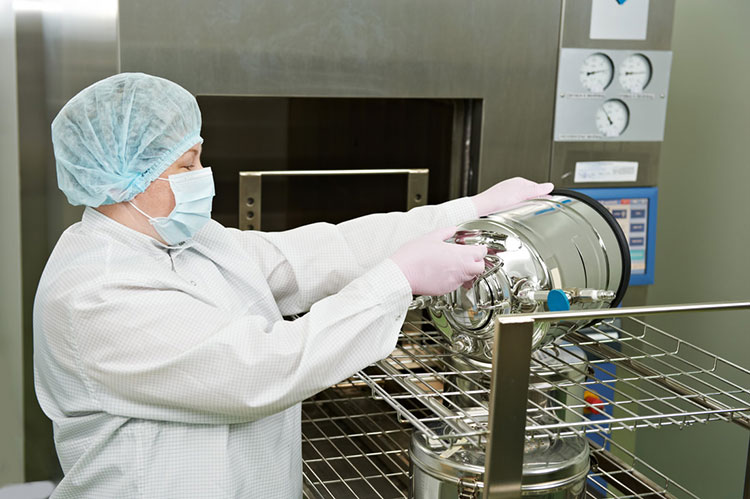
Premature Termination of Sterilization Cycle- Picture Courtesy: gbu-hamovniki.ru
| Cause | Troubleshooting |
| The longer heating time of large liquid loads leads to the end of the sterilization cycle. | It is suggested to place liquids in small containers to avoid the untimely conclusion of the sterilization cycle. |
Items are Not Sterilize
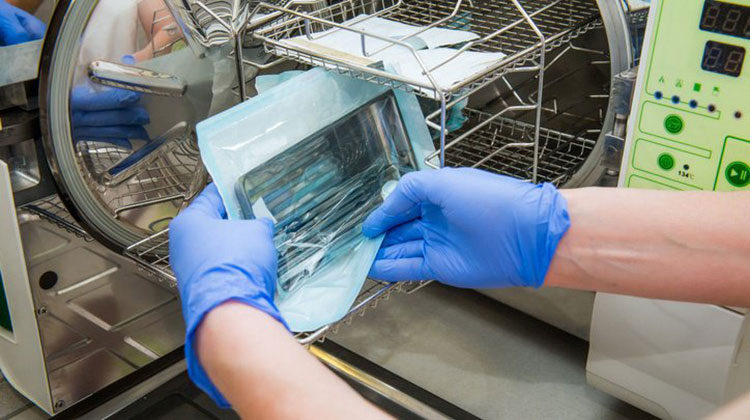
Items are Not Sterilize- Picture Courtesy: gbu-hamovniki.ru
| Cause | Troubleshooting |
| Inaccurate loading that shields drain opening and overcrowding.
Defect in the pharmaceutical autoclave. Inadequate quantity of steam Error in input cycle time. |
Properly place the items in the pharmaceutical autoclave to avoid covering critical points and overcrowding.
Check and repair the defective component in the pharmaceutical autoclave. Reset the correct cycle type. |
Item is Spoiled by Pharmaceutical Autoclave
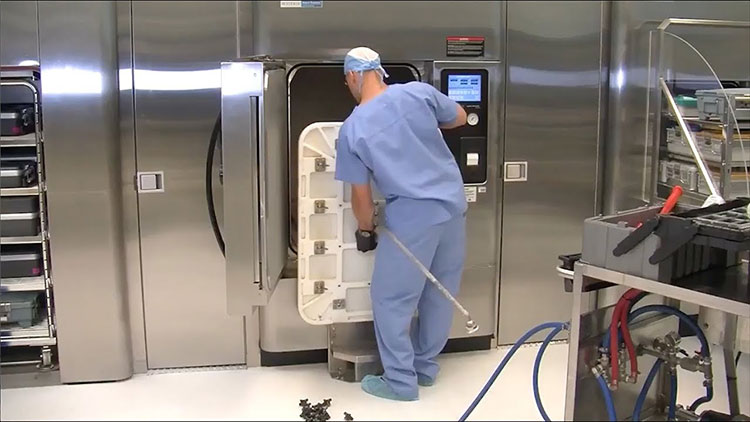
Item is Spoiled by Pharmaceutical Autoclave- Picture Courtesy: STERIS
| Cause | Troubleshooting |
| Items are not autoclaved safe.
Liquid loss due to boiling and evaporation. Sugars are burnt at high temperatures in a pharmaceutical autoclave. |
Train staff in using autoclave-safe items.
Use a specialized liquid cycle that gradually lowers the pressure. To avoid the sugar caramelization point, it is recommended to increase the duration of the sterilization cycle and reduce the sterilization temperature. |
14.What are the points to be remembered when looking for a pharmaceutical autoclave?
Selecting the right pharmaceutical autoclave for your industry is a critical process that affects the productivity and safety of your sterilization function. To make an informed choice, you must methodically and carefully ponder on key consideration points.
Here we will explain different points to remember when looking for a pharmaceutical autoclave.
Loading Capacity
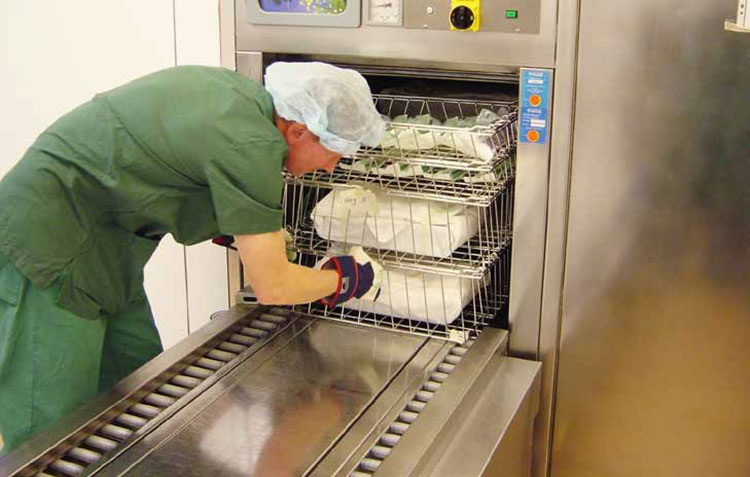
Loading Capacity- Picture Courtesy: News-Medical
Before going out, first, determine the volume of items needed to be sterile in every cycle. This will give you an estimate of the loading capacity of a pharmaceutical autoclave. If you process smaller loads in each cycle, then it is best to save money and opt for a pharmaceutical autoclave with a smaller capacity.
Size and Space Utilization
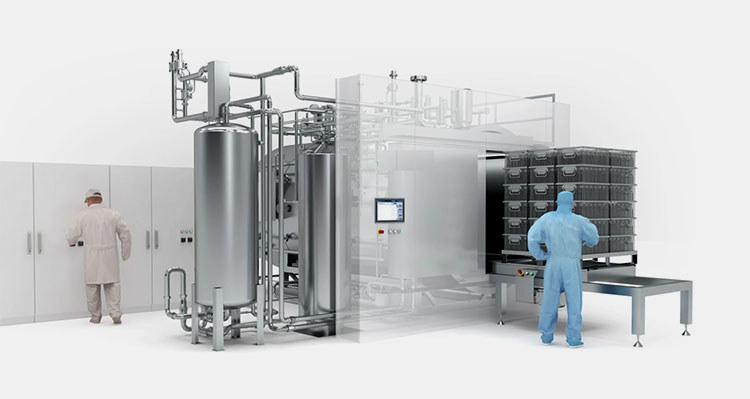
Size and Space Utilization- Picture Courtesy: Syntegon
Compact pharmaceutical autoclaves utilize less space. Similarly, vertical pharmaceutical autoclaves need more head space but less floor space. This autoclave is useful for plants with space constraints. Horizontal pharmaceutical autoclave with its horizontal loading has a larger footprint.
User-Friendly Controls
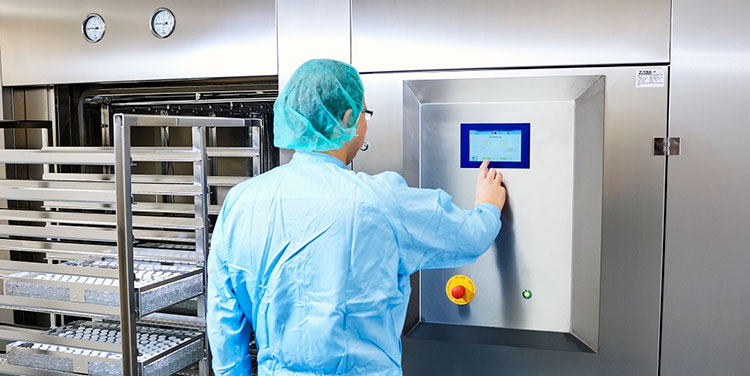
User-Friendly Controls- Picture Courtesy: Hvax Technologies
When looking for pharmaceutical autoclaves, it is best to consider ease of use. This ease of use is vital in various processes like loading and unloading, moving, and storing. A meticulous and systematic arrangement is required when loading the front-loading pharmaceutical autoclave. Conversely, the stacking arrangement makes it easy to load a vertical pharmaceutical autoclave.
Easy Installation and Setup
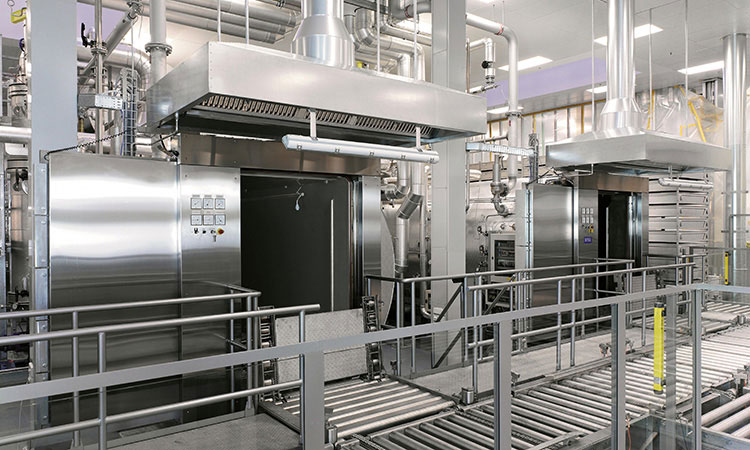
Easy Installation- Picture Courtesy: Belimed life Science
The installation process for a pharmaceutical autoclave can be complicated and expensive. Some models of pharmaceutical autoclaves need dedicated water and steam systems. Thus, these can only be installed in specific places. However, other models have integrated water reservoirs, thus they are installed easily anywhere, needing only an electricity source.
Cost-Efficiency
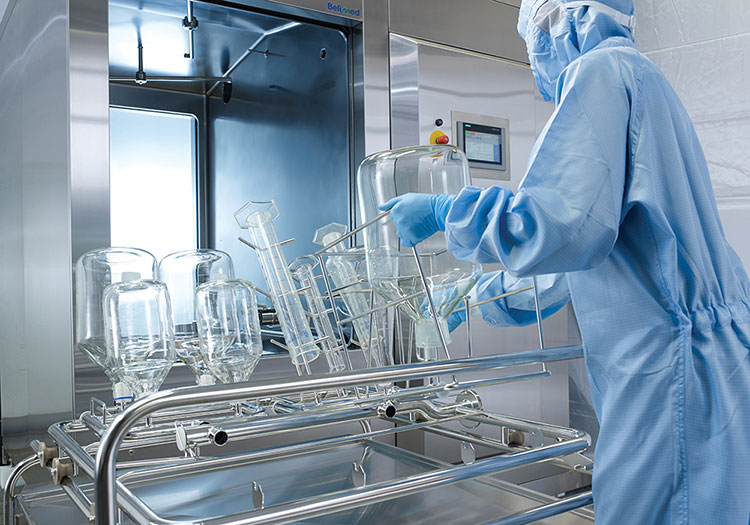
Cost-Efficiency- Picture Courtesy:sigmonlawpllc
Cost is a factor of paramount importance when making any purchase and pharmaceutical autoclave choice is no exception. Initial investment is important but consider the cost-effectiveness of your purchase in the long run.
Conclusion
A production autoclave is selected on three numbers — the F₀ your product requires, the batch loading your container format allows, and the cycle time that must fit inside your line's rhythm — with chamber volume a consequence of those three rather than a starting point. Send us your container format, hourly line output and required F₀, and we will return a sterilizer configuration with loading data, utility loads, the thermal validation package and the full document list.
CONTACT US
Tell us your raw material and project budget to get quotations within 24 hours.
WhatsApp:+86 181 6426 8586
Tell us your material or budget, we'll reply you ASAP within 24 hours