
Glass Bottle IV Solution Production Line vs. Plastic:A Comprehensive Comparison for Pharma Plants
Producing intravenous (IV) fluids is a critical responsibility, but choosing the right packaging material and production line can be a massive headache for manufacturers. You worry about safety regulations, production costs, and changing market trends, and making the wrong choice can hurt your bottom line for years.
Glass bottle lines offer superior barrier protection for sensitive drugs, while plastic lines (BFS and Non-PVC) provide lighter weight, lower transport costs, and higher speed automation. The choice depends on your specific drug formulation stability, logistics budget, and target market preferences.
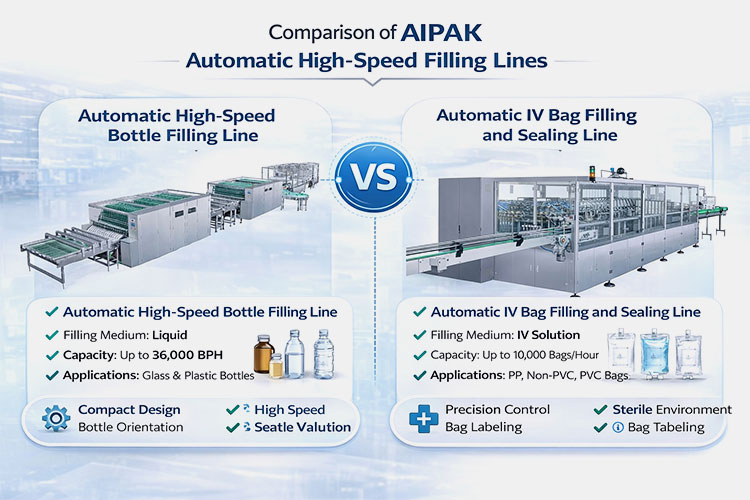
Glass vs Plastic IV Production Lines
We have seen the pharmaceutical industry shift dramatically over the last 10 years. We have helped clients in global markets set up both systems, and we know the decision is never simple. Let's look at the details so you do not stop reading and can make an informed decision for your facility.
1.Introduction: The Evolution of IV Fluid Packaging?
We used to see only glass bottles hanging by hospital bedsides. Now, when you walk into a clinic, you see plastic bags and bottles everywhere. This shift often confuses many manufacturers about which equipment they should buy for a new factory.
The evolution moved from rigid glass to flexible plastic to improve safety and logistics. Glass remains the gold standard for chemical stability, but plastic BFS technology has revolutionized production speed and sterility assurance for standard saline and glucose solutions.
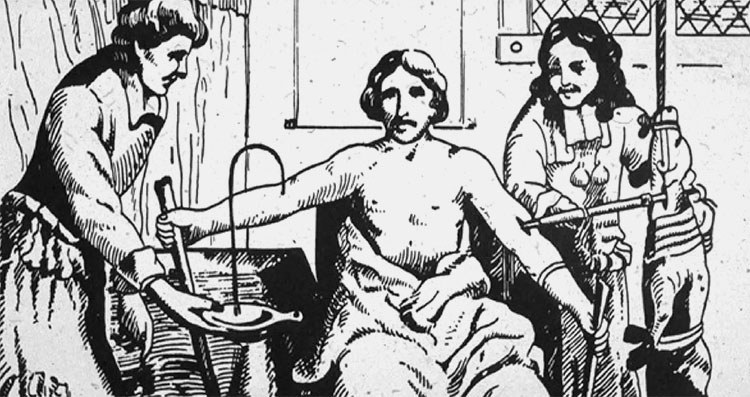
History of IV Packaging
I remember when I first started in this industry, glass was the only real option for high-quality IV fluids. Manufacturers did not trust plastic. They thought it would leach chemicals into the medicine. But times have changed. Today, material science has given us medical-grade polypropylene (PP) and polyethylene (PE) that are incredibly safe.
However, the shift is not just about the material. It is about the entire engineering process. In the past, a production line was just a series of machines connected by conveyors. Now, it is an integrated system. We see a move towards automation that reduces human touch. This is critical because people are the biggest source of contamination in a cleanroom.
At AIPAK ENGINEERING, we have watched this evolution firsthand. We see that developed markets like Europe and the USA prefer Non-PVC soft bags because they are collapsible and do not need an air vent, which reduces infection risk. Meanwhile, developing markets often still use glass or rigid plastic bottles because they are durable and the supply chain is established.
Understanding this history helps us see where the market is going next. You do not want to invest in a technology that will be obsolete in five years. You need to look at the trend, which is moving towards safer, lighter, and more automated packaging solutions.
2.Glass Bottle IV Production Lines: The Traditional Standard?
You might think glass is old-fashioned and ready to be retired. However, for certain high-value drugs and specific antibiotic formulations, glass is still the only safe option. Ignoring glass means losing a specific, high-profit market sector that relies on this stability.
Glass bottle lines use a washing-drying-filling-sealing process. They are essential for drugs that react with plastic or require vacuum sealing. These lines typically run at speeds like 450 bottles per minute (bpm) for high-quality output.
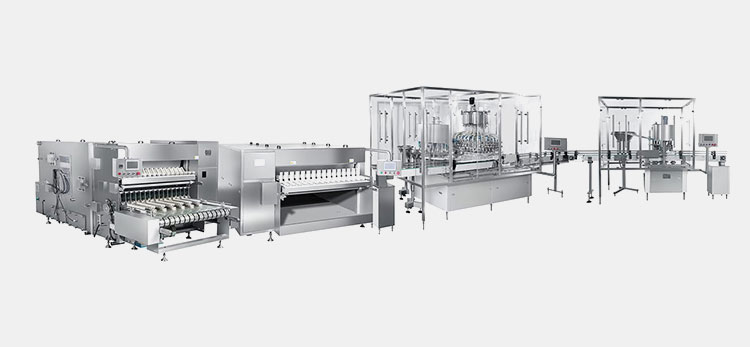
Glass Bottle IV Filling Machine
When we talk about glass production lines, we are talking about a process that is proven and robust. The core of this system is the washing and sterilization phase. Unlike plastic, you cannot just make the bottle on the spot. You have to bring in empty glass bottles, which are often dirty from transport.
This is where the engineering gets interesting. A modern high-end glass line from us can handle up to 450 bottles per minute (bpm). That is 27,000 bottles an hour. To do this, we use ultrasonic washing machines. These machines use sound waves to blast dirt off the glass in a water bath. After washing, the bottles go through a depyrogenation tunnel. This is a huge oven that heats the glass to over 300°C to kill every single bacteria and destroy pyrogens.
The filling station is also unique. Glass allows for vacuum stoppering. This is crucial for lyophilized (freeze-dried) drugs or products that degrade with oxygen. Plastic bottles usually cannot handle a strong vacuum; they would collapse. So, if your product is sensitive to oxygen or needs a long shelf life of 3 to 5 years, glass is often the winner.
However, you must consider the downsides. Glass is heavy. A pallet of glass IV bottles weighs significantly more than a pallet of plastic ones. This increases your shipping costs. Also, glass breaks. We have seen production lines stop for hours because one bottle shattered inside a high-speed machine, scattering shards everywhere. It requires a lot of maintenance and care. But for stability and quality, it is still the king.
3.Plastic Bottle/Soft Bag Production Lines: The Modern Alternative?
Shipping heavy glass costs a fortune and eats into your profit margins. Hospitals also hate cleaning up broken glass and dealing with heavy waste. Plastic lines solve these problems and offer faster production speeds with less physical waste.
Plastic lines, specifically Blow-Fill-Seal (BFS) and Non-PVC soft bag lines, integrate forming and filling in one sterile step. They achieve high capacities, often exceeding 12,000 bottles per hour (bph), making them ideal for large-volume parenteral (LVP) manufacturing.
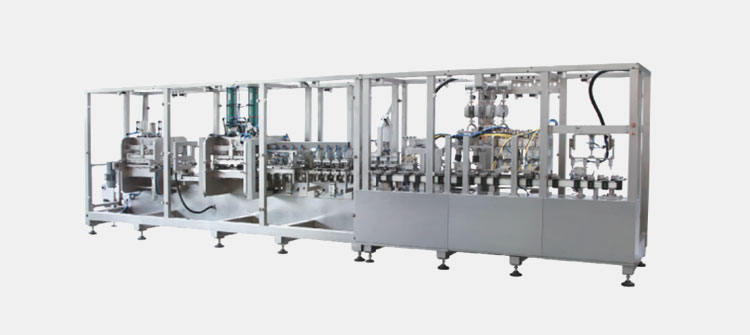
BFS and Non-PVC Soft Bag Machine
Let's dig into the technology that makes plastic so attractive. The real game-changer here is the "three-in-one" Blow-Fill-Seal (BFS) technology. In a traditional glass line, you have three separate zones: washing, sterilizing, and filling. In a BFS machine, everything happens in one small, enclosed space.
Here is how it works: The machine melts plastic granules and extrudes a tube of hot plastic (the parison). A mold closes around it to form the bottle (Blow). Immediately, a nozzle comes down and fills the bottle with the liquid (Fill). Then, the top is sealed shut (Seal). All of this happens in seconds inside a sterile air shower.
This is a massive advantage for aseptic safety. We often tell our clients: "You do not need to clean the bottle if you make the bottle inside the cleanroom." The container does not exist until the moment it is filled. This eliminates the risk of contamination from storage or transport of empty bottles.
Then there is the Non-PVC soft bag option, specifically our SRD and SRDS series. These are the soft bags you see collapsing as the fluid drains. Why are these superior for Large Volume Parenteral (LVP) production? It comes down to Return on Investment (ROI). Rigid containers (glass or hard plastic) need an air needle to let air in so the fluid flows out. This air can carry bacteria.
Soft bags collapse on themselves, so no air enters. Hospitals pay a premium for this safety feature. Although the film material costs more than simple plastic granules, the final product sells for a higher price, giving you a better profit margin in the long run.
4.Head-to-Head Comparison: Glass vs. Plastic?
You have the basic definitions now and understand the workflow differences. But how do the numbers stack up against each other in a real factory setting? We need to compare speed, cost, and safety directly to see the real winner.
When comparing capacity, high-end glass lines reach 450 bpm, whereas plastic lines can hit 24,000 bph or more depending on the configuration. Glass requires more cleanroom space for washing, while plastic BFS is compact. Plastic saves on logistics, but glass saves on drug stability testing.
| Feature | IV Bag Line A: Modular & Encapsulated | IV Bag Line B: Total Aseptic Enclosure |
| Design Highlights | Modular stations | Total aseptic enclosure |
| Encapsulation Type | Partially encapsulated with glass/plexiglas enclosures | Total sterile enclosure to reduce contamination risks during aseptic processing |
| Operation Mode | Uses reel-fed film | Integrated aseptic processing, for example, using F-F-S (Form-Fill-Seal) |
| Material Input | Includes a bottle feed hopper | Includes a bottle inlet conveyor |
| Liquid Handling | (Not mentioned) | Aseptic liquid handling is integrated |
| Cleanroom Requirement | (Not mentioned) | Requires increased cleanroom conditions |
| Key Advantage | Versatile formats and lower total cost | Reduces contamination risks during aseptic processing |
| Control System | HMI control panels | An Omron HMI screen |
Data Comparison IV Lines
This is the part where we need to use some critical thinking. Let's break down the specific capacity difference. A high-end glass line running at 450 bpm is actually producing 27,000 bottles per hour. That is incredibly fast. However, maintaining that speed with fragile glass is difficult. If one bottle breaks, the whole line stops.
On the other hand, a standard plastic bottle line might be rated at 12,000 bph (bottles per hour). While the raw number looks lower, the *efficiency* is often higher. Plastic lines run smoother with fewer stoppages because plastic does not shatter. You can run them 24/7 with less downtime.
Now, let's look at the cleanroom engineering. This is a hidden cost many people forget.
For a **Glass Bottle Line**, you need a massive footprint. You need a "dirty" area for washing, a transition zone for the tunnel, and a strict Class A/B area for filling. The HVAC (air conditioning) costs to keep these huge rooms sterile are high.
For a **Plastic BFS Line**, the machine is compact. The "cleanroom" is effectively inside the machine itself. You can often put a BFS machine in a Class C (ISO 7) room because the critical zone is protected by the machine's own shroud. This saves you millions in construction costs and monthly electricity bills.
We also need to compare the "Three-in-One" BFS technology against traditional glass cleaning in terms of aseptic safety. With glass, you rely on the washing machine to remove particles and the oven to kill bacteria.
If the washer misses a spot, or the oven temperature drops, you have a problem. With BFS, the plastic is melted at over 170°C. It is sterile by heat. It is a closed system. The human operator never touches the open container. Statistically, BFS technology has a lower contamination rate than traditional open filling lines.
| Feature | Glass Bottle Line | Plastic BFS / Soft Bag Line |
| Primary Speed | High (up to 450 bpm / 27,000 bph) | Moderate to High (12,000 - 24,000 bph) |
| Sterility Method | Washing + Depyrogenation Tunnel | Molten Plastic Heat (Sterile Formation) |
| Cleanroom Space | Large footprint required | Compact footprint |
| Logistics Cost | High (Heavy, fragile) | Low (Lightweight, durable) |
| Drug Compatibility | Excellent (Inert) | Good (Requires stability testing) |
5.Selection Guide: Which Line is Right for You?
Buying the wrong line is an expensive mistake that can bankrupt a new project. You do not want a machine that sits idle because it cannot handle your drug formula or costs too much to run.
Choose glass if you produce sensitive antibiotics or chemicals requiring 100% inert containers. Choose plastic BFS or Non-PVC bags if you produce standard saline, glucose, or need to minimize shipping weights for large distribution networks.
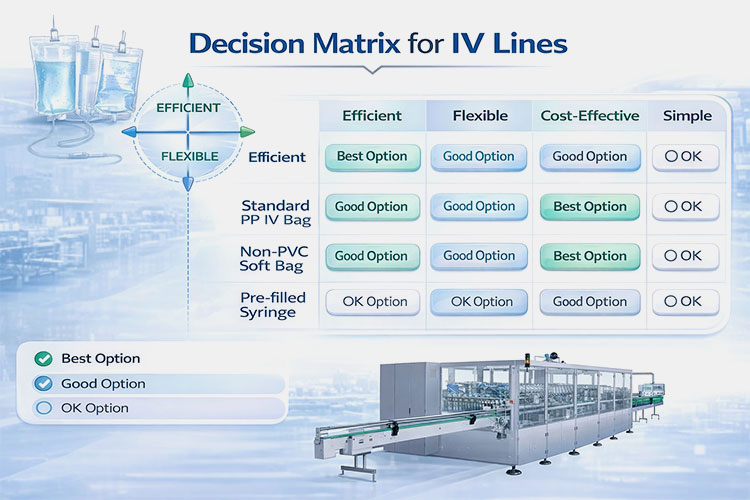
Decision Matrix for IV Lines
How do you decide? I usually sit down with our clients and ask them three questions.
First, **what is your product?** If you are making basic 0.9% Sodium Chloride (Saline) or 5% Dextrose, plastic is the way to go. The market demands cheap, light, and disposable containers. The ROI on Non-PVC soft bags for these large-volume products is superior. However, if you are making a specialized cancer drug, a contrast agent for X-rays, or a novel antibiotic that is sensitive to oxygen or moisture, you must use glass. Glass is the only material that guarantees no interaction between the container and the drug.
Second, **where are you selling?** If your market is local and you have a short supply chain, glass is manageable. But if you plan to export to other countries, the weight of glass will kill your profits. Plastic soft bags allow you to pack more units into a shipping container. Also, consider the hospitals. In disaster zones or field hospitals, they prefer soft bags because they do not break.
Third, **what is your budget for infrastructure?** As we discussed, glass lines need bigger buildings and more complex water systems (for washing bottles). Plastic lines need less water (no washing) but require more electricity (to melt plastic). You need to calculate your local utility costs. In some areas, water is cheap but electricity is expensive, which might sway your decision.
We also suggest looking at the Non-PVC soft bag lines (SRD/SRDS series) if you want to position yourself as a premium supplier. In many markets, soft bags are seen as "higher quality" than hard plastic bottles, allowing you to charge a few cents more per unit. Over millions of units, that adds up to a massive difference in revenue.
6.Conclusion: Engineering for Future-Proof Manufacturing?
The market changes quickly, and a line you buy today needs to work for the next ten or twenty years. You must plan for future regulations and sustainability goals to ensure long-term success.
Future-proofing involves selecting flexible equipment that supports automation and GMP compliance. Whether you choose glass or plastic, AIPAK ensures your facility meets global standards for efficiency, safety, and scalability.
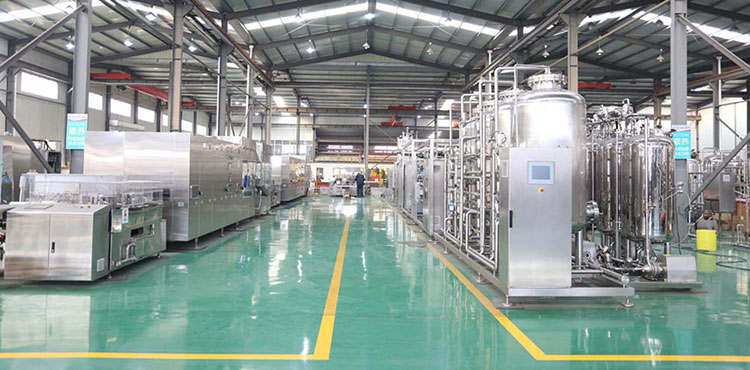
Modern Pharma Factory
When we look at the future, we see two main drivers: sustainability and automation.
Glass is infinitely recyclable, which is a strong selling point as the world gets stricter on plastic waste. However, the carbon footprint of transporting heavy glass is high. Plastic is lighter, reducing transport emissions, but waste disposal is an issue. Non-PVC materials are becoming more eco-friendly, and we are seeing new incineration-safe plastics entering the market.
Automation is the other key. Modern lines, whether glass or plastic, must be "smart." We are integrating sensors that track every single bottle. If a bottle is underfilled, the machine rejects it automatically and records the data. This level of traceability is becoming a legal requirement in many countries.
Finally, consider the flexibility of the equipment. Our clients often start with one product and expand. A good production line should allow for quick changeovers. Maybe today you fill 100ml bottles, but tomorrow you need 500ml. The equipment we supply is designed for this modularity. We want you to grow, not just survive. Whether you go with the traditional reliability of glass or the modern efficiency of plastic BFS, we are here to help you engineer a solution that lasts.
Conclusion
Choosing between glass and plastic IV lines depends on your drug stability needs and logistics strategy. Glass ensures quality for sensitive drugs, while plastic BFS offers speed and lower shipping costs. We help you weigh these factors to build a profitable, GMP-compliant facility.
Don't forget to share this post!
CONTACT US
Tell us your raw material and project budget to get quotations within 24 hours.
WhatsApp Us: +86 181 7101 8586
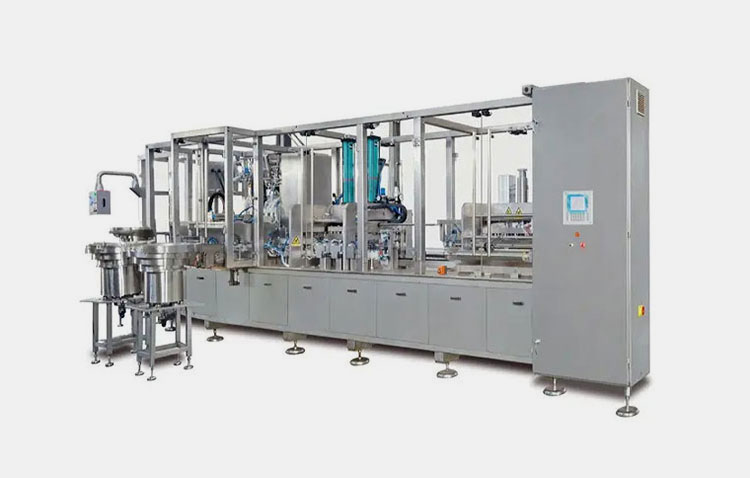 Tell us your material or budget, we'll reply you ASAP within 24 hours